
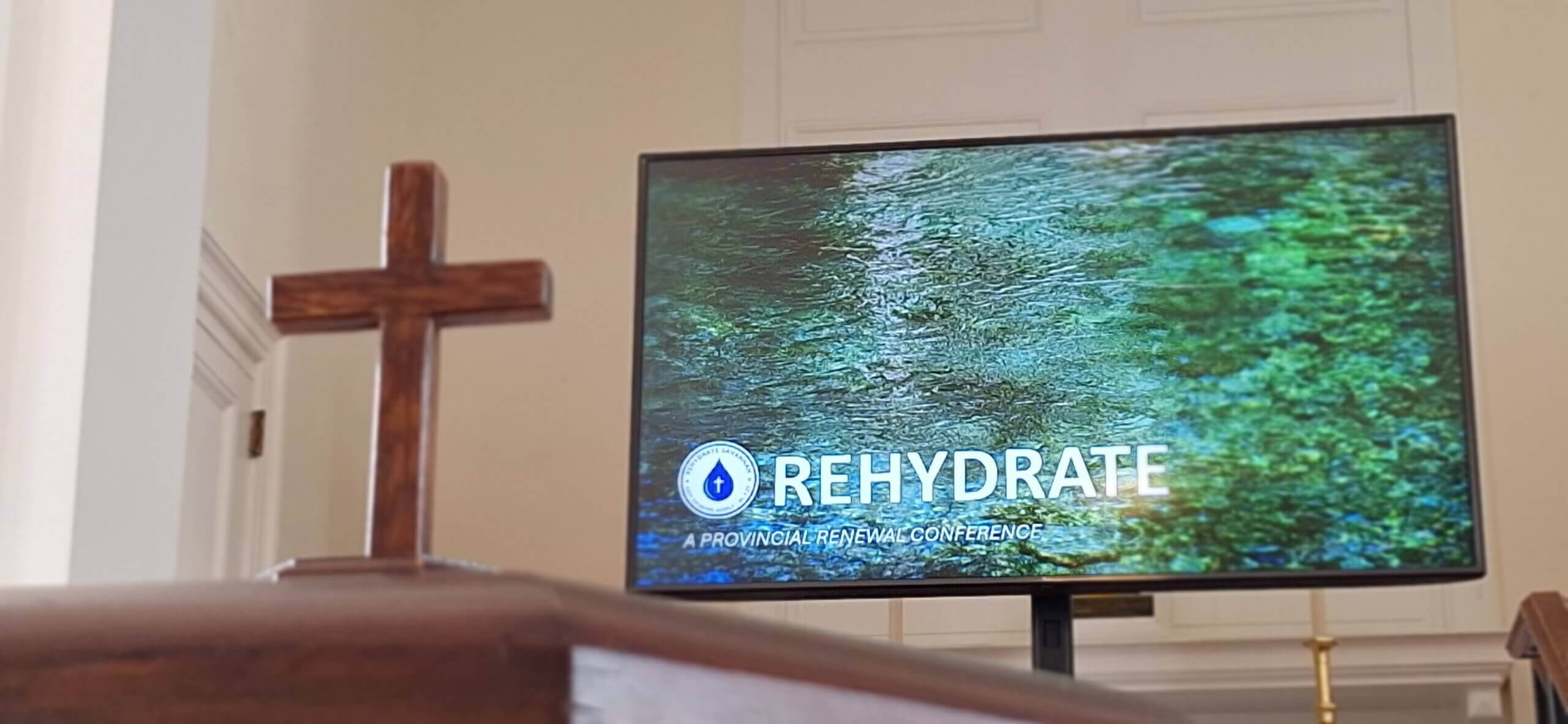
Just a few days ago, the first Provincial Renewal Conference in the ACNA in five years—the AAC-SOMA-sponsored Rehydrate Conference in Savannah—concluded. It began the day after Ash Wednesday and was heavily focused on repentance as well as renewal. Canon Mark Eldredge often says, “There is no revitalization without renewal.” The history of revival and renewal teaches us a similar dependency: there is no renewal without repentance. If God’s people do not feel the weightiness of their sin and how far they have fallen short, their confession of sin and repentance will likely be shallow and unsustainable.
What is “renewal,” anyway?
Richard Lovelace, a 20th-century Reformed scholar of renewal, says that spiritual renewal can be defined as the Holy Spirit’s work in infusing new spiritual vitality into individuals, churches, and denominations. It is “the love of God poured out within our hearts through the Holy Spirit” (Romans 5:5). It is when people turn from self-absorption to delight in God’s glory, and from self-will to obedience to God and love for others. It is connected to refreshment in the Holy Spirit, corporate prayer and preaching meetings, and an emphasis on the expansion of Christ’s Kingdom. The charismatic renewal is one of many different moves of God that He has used to further His Kingdom in church history.
The Rehydrate Conference brought together God’s people in the ACNA who long to see God’s Holy Spirit poured out on us again. We were, and are, seeking a visitation of God to move afresh in our day. Many of us were touched and transformed by God in the charismatic renewal of the ’60s–’90s, and we give thanks for that. I am one of those. We know that we are not going back to those days. That wave waxed and waned among us. Even so, many of us believe that the truths and blessings of that renewal are embedded in the Scriptures and so will always remain a live possibility for the people of God.
There is a sense that we have some unfinished business from that past move of God. My belief is that the charismatic renewal among us waned not so much because of theological errors (we Anglicans largely avoided the errors of the Word of Faith movement and the prosperity gospel) but rather because of errant practice and lack of proper oversight. The theology can and will be debated, but the woundings received due to false prophecies, manipulative pastors and leaders, and lack of proper oversight remain for far too many of us.
As a result of the abuses, errors, and woundings received at the hands of those in the charismatic renewal, many among us have turned away from its emphases altogether. In doing so, we court disobedience to the commands of Scripture, like the one found in 1 Corinthians 14:1: “Eagerly desire spiritual gifts, especially prophecy.” The vast majority of us agree that all the gifts of the Spirit are for today. That being the case, 1 Corinthians 14:1 is an imperative; we do not get to ignore it. A question we might ask is, “How can we Anglicans faithfully obey it in a pastorally sensitive manner?”
The remedy for misuse of spiritual gifts is not disuse, but proper use of the gifts. The remedy for bad teaching is not ignoring the subject altogether, but rather good teaching directly into these matters. The remedy for lack of oversight in a movement that emphasizes the priesthood of all believers (1 Peter 2:9) is not to ignore that text, but rather to exercise proper oversight. The remedy for past wounding is not to soften the demands of the Scriptures, but rather to gently and persistently minister to the wounded so that they receive the healing they desperately need. These last two, oversight and healing, require such time and effort from our leaders that, in many cases, they have been lacking. It can seem easier to simply avoid teaching and practicing such things of the Spirit altogether in one’s congregation, because it takes a great deal of work to manage. If we take that road, we ought not to be surprised if we see our congregations lacking the spiritual vitality that we earnestly pray for.
In Lent, we are bid to search our hearts and to confess any unclean way within us. I believe that those on the inside of a movement ought to be the first to own their own sins of omission and commission and to confess them. We do need to address the sins associated with the charismatic renewal. At the Rehydrate Conference, we did this in the form of a Litany as a response to a call to humility. God used it powerfully at the conference, and we have had many requests to publish it for broader use. We offer it below, separately published for your use.
May our God strengthen you as you confess your sins and receive forgiveness in Jesus’ Name. May He grant you a holy Lent.