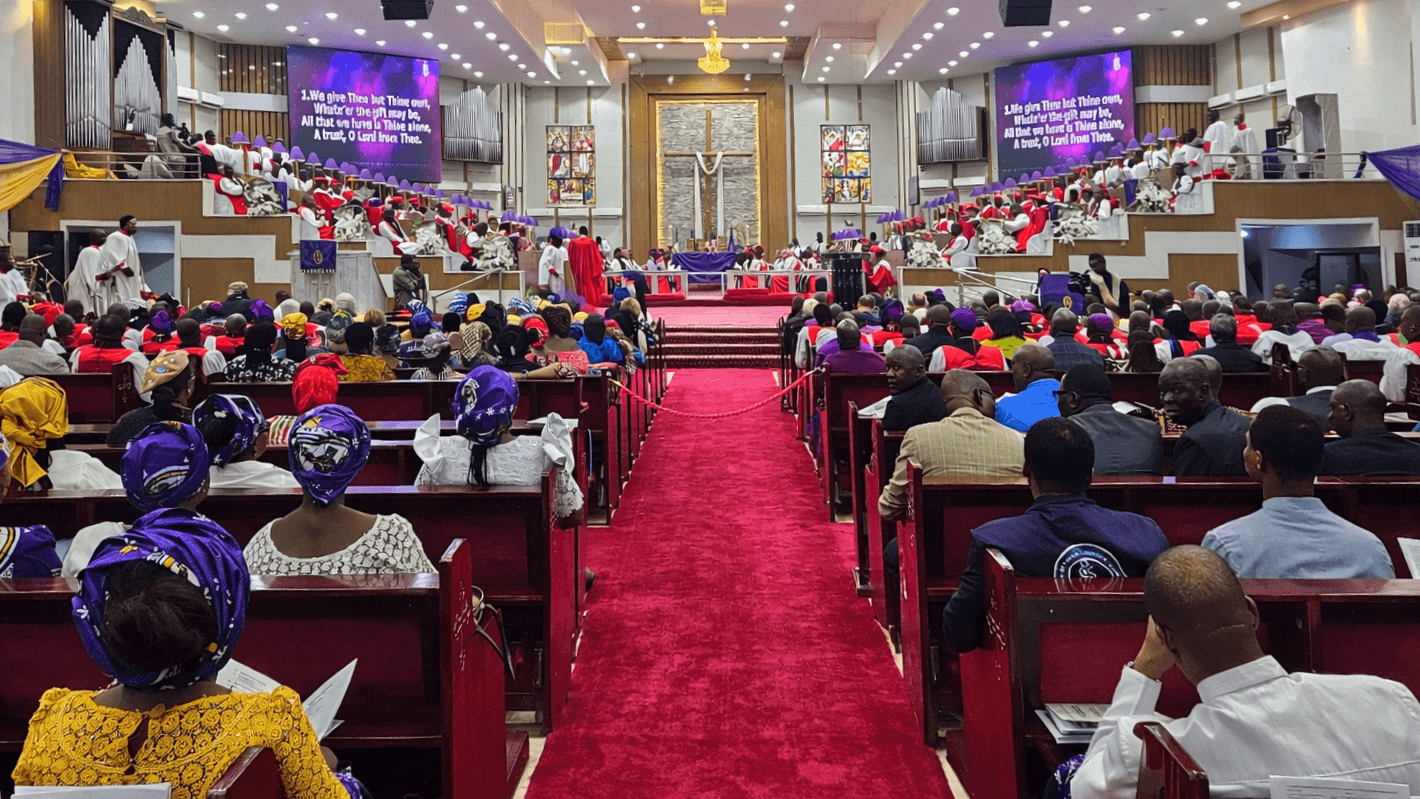
I could not travel to the G26 gathering of the GAFCON faithful in Abuja, Nigeria, this year. My wife and I were home welcoming our third child, our first daughter, into God’s world. I surely wanted to be in two places at once, though! As the Director of Anglican Governance Ministries, the discussions at G26 were of intense interest for me. Thankfully, those on the ground in Abuja, representing the American Anglican Council, kept me up to date on the events as they unfolded. Along with many of you, I watched and listened with great attention from afar as G26 broke new ground in subtle and yet profound ways in our efforts to steward faithful Anglicanism towards the bright future God has in store for this branch of His global church.
The highlights of G26 are likely already known to many of you. Faithful Anglicans from all over the globe came to worship and pray and continue charting a course for the future of orthodox Anglicanism. The delegations included 347 bishops (including 30 from the ACNA) and 121 lay and clergy delegates from 27 provinces and representing 85% of the members of the Anglican Communion. They met to reaffirm that GAFCON is not abandoning the Anglican Communion, nor acting schismatically, nor creating something new. Rather, GAFCON is taking up the mantle of orthodoxy for Anglicanism, stewarding its riches for future generations that will include my little one-month old daughter. Indeed, the faithful in Abuja last month are the Anglican Communion and the decisions at G26 carry far more weight and importance for the future of the Communion than did the pomp-and-circumstance of the installation of Sarah Mullalley as the Archbishop of Canterbury just a few short days after the events in Abuja came to a close.
The Abuja Affirmation emerged as the final statement of G26. A collaborative document, to which all who gathered, bishops, priests, deacons, and laity contributed, made a number of profound iterative shifts in how faithful Anglicans seek to distinguish ourselves from the old ways of doing things within the Communion.
First, G26 adopted a more accurate name for our efforts to reground Anglicanism in scriptural truth and our rich theological heritage. Henceforth, we shall be the Global Anglican Communion. Not only does this name distinguish us from the Canterbury-led communion, but it evinces the truth – that the strength of Anglicanism lies not in the lovely halls of Lambeth Palace or the vast coffers of Trinity Wall Street with its $2 billion endowment, but in places like packed village parish churches in Uganda and Nigeria and Rwanda; tiny, faithful church plants in the ACNA; and Bible studies led by the Anglican Network in England.
Second, it was decided that the Global Anglican Communion would not be led by a single figurehead who might be perceived as going “head-to-head” with the Archbishop of Canterbury. The descriptive term prima inter pares (“the first among equals”) has long been applied to the Archbishop of Canterbury, to signal how that office holder leads the other archbishops of the Communion due to historic tradition. A Spirit-led discussion and decision in Abuja moved the leaders gathered at G26 to abandon this language and move towards a council as the primary means of leadership (you can read more about how this council works in our exclusive interview with the Gafcon Secretariat here). This council will be three-fold, made up of primates, advisors (a body of key GAFCON bishops), and guarantors (key clergy and laypersons who have long been in our fight for orthodoxy). This layered conciliar leadership structure is still being fleshed out as the constitution of the Global Anglican Communion is formed.
Third, it was decided that any person in leadership within the Global Anglican Communion, whether on the Global Anglican Council, or a network leader, or otherwise – is forbidden to participate in anything to do with the old ways of the Canterbury-led Communion. This idea of “principled disengagement” seeks to avoid the confusion that can arise when a leader of GAFCON looks to be united with Canterbury in a photoshoot on the Lambeth steps or is financially dependent on heterodox bodies within Anglicanism. Our disagreements over doctrine and morality are not secondary but primary, and optics can surely create confusion. While provinces and diocese that affirm the Jerusalem Declaration are welcomed to join the Global Anglican Communion without this requirement of disengagement, the leaders of the Global Anglican Communion must take pains not to compromise their role through acting as if the missions of the Global Anglican Communion and the Canterbury-led Communion are in alignment.
From the AAC’s perspective, these second and third developments are key in resolving what we sometimes call “primatial churn.” In the past, when a primate who is deeply committed to the work of GAFCON retired, the risk always existed that his replacement might be less fervent about the work or, worse, already compromised by the lure of the financial and cultural attractions of old colonial ways. Requiring those in leadership to exercise “principled disengagement” will help alleviate this complexity, and having advisors and guarantors serving in leadership on the Council will help keep the Global Anglican Communion pointed towards the fight for orthodoxy, even as the body of primates experiences unavoidable turnover.
There are many questions still to be answered. How will authority be shared on the Council? How do we onboard new advisors and guarantors? How will we discipline those who fail to uphold “principled disengagement?” All of these questions will, I trust, be worked out in due course and the AAC looks forward to supporting the Global Anglican Communion’s bright future.
I love the heritage of Anglicanism and am proud to raise my two sons and my brand-new daughter within its riches. May we do our part in our day to fight against heterodoxy in the church. May we go forth bravely under Christ’s banner in our struggle against the world, the flesh, and the devil. And may the generations that come after us, through our faithfulness and the work of God’s Spirit, receive the faith delivered once for all to the saints and grow to know, love, and serve the Lord.