
This article is based on a BBC article, written on Gafcon’s G26 Council, which can be found here: https://www.bbc.com/news/articles/cgrz1rx0ejzo
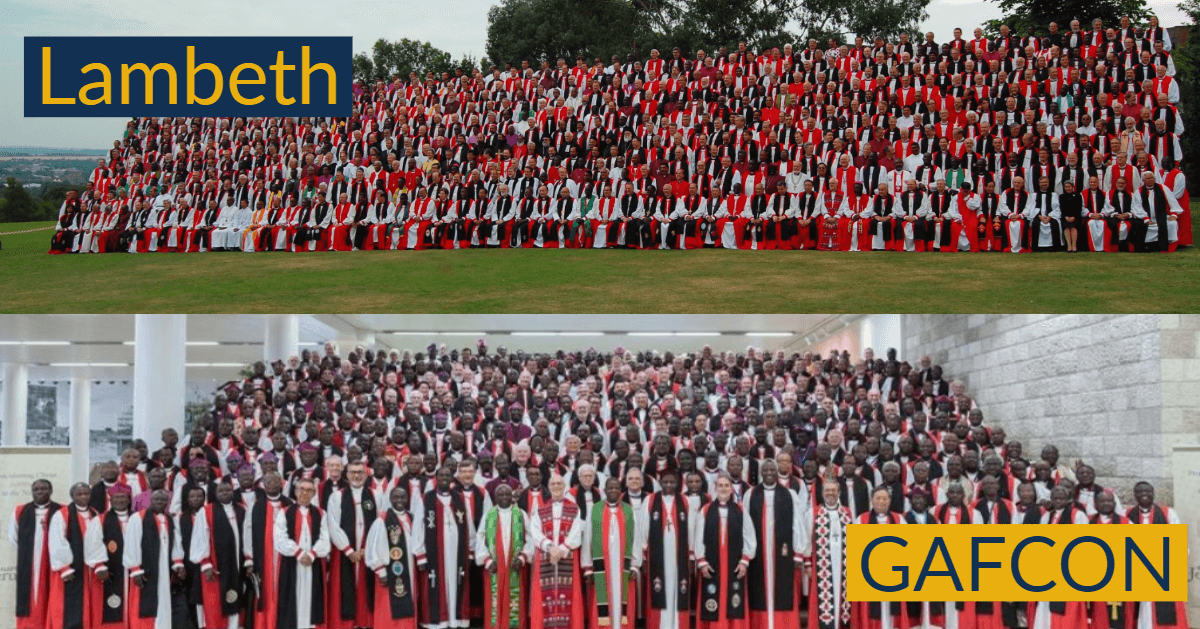
“Clergy from a conservative grouping of the Anglican Church.” That is how the BBC chose to describe those gathered this week for the GAFCON Council in Abuja. The phrase is technically convenient, but it obscures a basic reality: this so-called “conservative grouping” represents roughly three-quarters of the world’s Anglicans.
One would expect a reporter stationed in Lagos to be aware of the Church of Nigeria, the largest province in the Anglican Communion and one of the primary hosts of this gathering. To describe the movement represented here as merely a “grouping” suggests either unfamiliarity with the global Anglican landscape or a willingness to frame the story in a way that minimizes its significance.
The BBC article also implies that the GAFCON movement is reacting primarily to the appointment of Dame Sarah Mullally as Archbishop of Canterbury. Anyone actually present in Abuja would know otherwise. This council was scheduled long before her appointment. On the second day of the gathering, GAFCON General Secretary, the Rt. Rev. Paul Donison, made the point plainly: the issue is not the archbishop’s gender, but the theological direction of the Church of England and other Western provinces that have departed from historic Anglican teaching.
If the BBC genuinely believes this moment is about the gender of the Archbishop of Canterbury, it suggests either a serious misunderstanding of the situation or a refusal to listen to what leaders here have repeatedly said.
The article also quotes Diarmaid MacCulloch, Emeritus Professor of Church History at Oxford, who describes the gathering as “a set of leaders, all male, going to a conference in Africa to assert an identity which no longer satisfies many Anglican churches.” That claim raises an obvious question: which Anglican churches, exactly?
The reality is that many of the churches represented in Abuja, particularly in Africa, Asia, and the Global South, make up the overwhelming majority of the Anglican Communion’s membership. If anyone is speaking for “many Anglican churches,” it is the bishops gathered here. The recurring Western media portrayal of GAFCON as a fringe movement “coming to Africa” ignores a simple fact: it is in Africa because Africa is where the majority of Anglicans live.
The BBC also notes that GAFCON “says it speaks for the majority of the world’s Anglicans, although that is contested.” By whom, exactly? The demographic numbers are not difficult to examine. The provinces represented in GAFCON, many of which also belong to the Global South Fellowship of Anglicans, account for the clear majority of practicing Anglicans worldwide. Calling this movement “fringe” does not change that reality.
Professor MacCulloch further describes GAFCON’s actions as “very aggressive.” But in some Western circles, any refusal to conform to the theological innovations of Western church leadership is labeled “aggressive.” Those present in Abuja would struggle to recognize that description. The atmosphere here is marked far more by conviction and confidence than by hostility. The leaders gathered believe they are continuing the Anglican faith as they received it, ironically from the very Western churches now dismissing them.
The article also points to proposals that will be discussed at the Anglican Consultative Council (ACC) in June to broaden leadership structures in the Communion. Yet GAFCON provinces have largely lost confidence in these instruments of communion after years of promises that produced little accountability. From their perspective, the structures designed to preserve unity have instead enabled theological departures while offering no meaningful response.
In the same article, the Rt. Rev. Anthony Poggo, Secretary General of the Anglican Communion, is quoted asking what can be done if one part of the Anglican “family” refuses to listen to the communion’s instruments. His answer was refreshingly candid: “There is not much you can do.”
On that point, he is exactly right. There is not much the existing structures can do, and so, GAFCON is free to move forward, seeking to remain faithful to the Anglican tradition as it received it, grounded in Scripture and historic doctrine. Western provinces may chart their own course, if they choose to. The invitation to them, however, remains open: to walk together toward Christ rather than away from the faith once received.
Finally, one curious element of the BBC piece is its choice of sources. Rather than speaking with one of the many Nigerian bishops or archbishops present, leaders responsible for millions of Anglicans, the reporter quotes a 34-year-old youth pastor as though he were a representative voice for the Church of Nigeria. If the BBC wished to understand what Nigerian Anglicans actually think, there were no shortage of senior church leaders present to ask. Instead, readers were left with a carefully selected voice that conveniently reinforces the narrative already chosen: a youth pastor, who may or may not have known just how he would be quoted. Somehow, his fear of not getting into heaven is based on his church’s relationship with Canterbury, but this does not reflect the position of the Church of Nigeria, and neither does it reflect the Gospel of Jesus Christ.