

| I’ve written much over the years on Church Health principles, specifically on the importance of being balanced in all five vital areas of a local church’s ministry. I’ve captured those five areas in the acrostic: VITAL, which stands for Vision for Evangelism/Mission, Intentional Worship, Transformation to Christlikeness, Authentic Community, and Lay Mobilization. (You can read about this in much more detail in my book, Revive, which you can get by clicking here.) In this article, I want to drill down on how to make these vitals even more effective for growth. The idea isn’t only to work on keeping these five areas in balance, but to think about them as flowing from one area to the next. They’re not separate silos working independently of each other. Rather, each vital area feeds into the next, starting with the “V” and going on through to the “L”. Think of the VITALs of church health not only as a plan for getting healthy and growing your church but also as a process. The Plan As we’ve written about many times in these articles, if you want to grow your church, don’t focus on trying to grow but on becoming healthy. The church is the Body of Christ, so it’s a body not a business, an organism not just an organization. Like a living plant, the local church will grow as God designed it to grow if it’s healthy. The problem is that most congregations aren’t healthy! They’re often strong is some areas but weak in others, and to be healthy, your church needs to be intentionally vibrant in all five of these vital areas. It takes time to get strong in all of them, usually about three to five years, and when a church finally gets there, it takes diligence to keep these areas strong year after year. The Process Once your church is committed to this plan over the long haul, then you can begin to see the VITALs working together to fulfill the Great Commission and Great Commandment in your local area. You could think of it like a funnel: 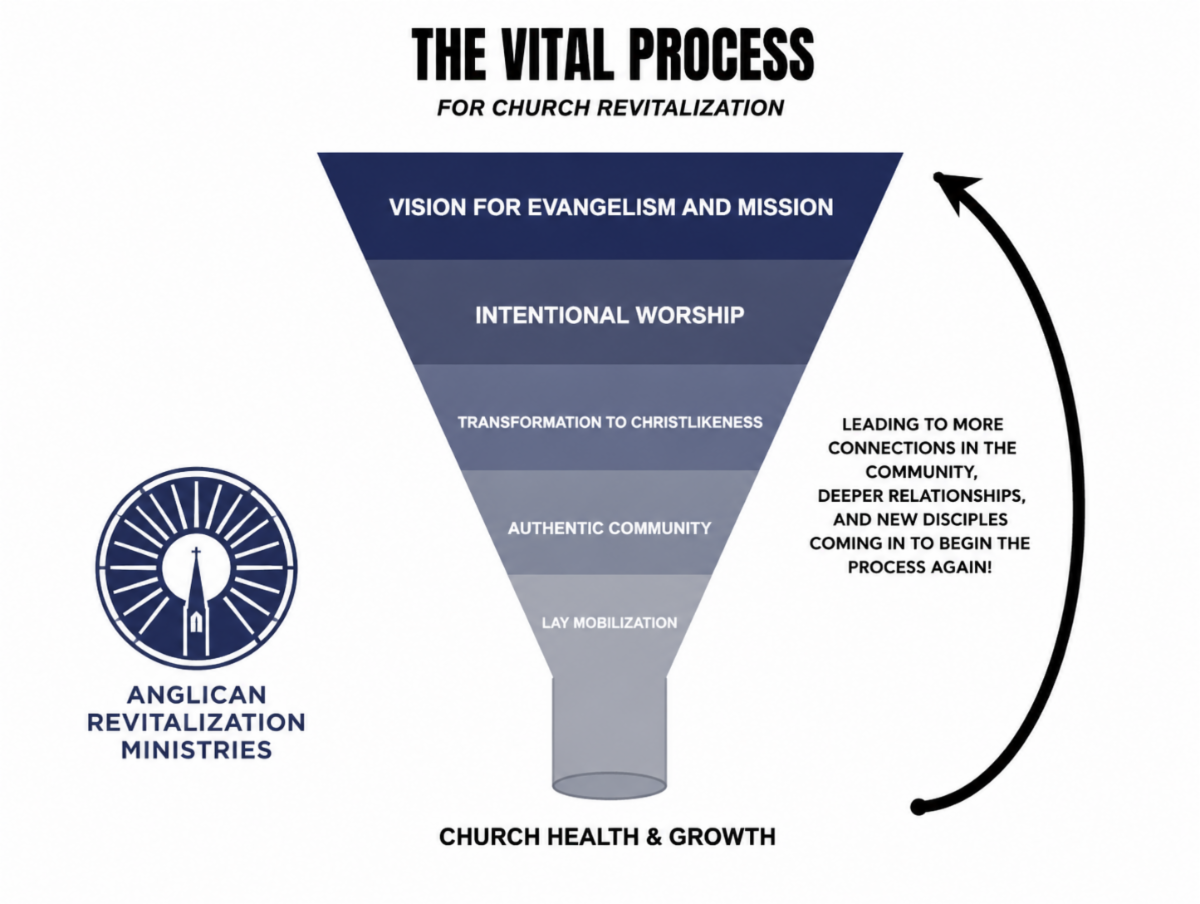 |
| Above and outside of the funnel is the community your church is located in: your town or part of your city. In that community are lost, unsaved people who are separated from God and going to Hell. This is where the “V” or Vision for Evangelism/Mission comes in at the top of the funnel, helping us identify who God is calling your church to reach. The truth is, you can’t reach everybody, but you can reach some. As Paul said in 1 Corinthians 9:22, “To the weak I became weak, to win the weak. I have become all things to all people so that by all possible means I might save some.” (NIV) The clearer you can be at defining who you’re focused on missionally, the more effective strategies you can deploy to meet them where they are. As you go and build relationships with them, you strive to bring them to salvation in Christ and into the Church. This is where the “I” comes in at the next level down the funnel, which stands for Intentional Worship, with your church becoming hospitable in your worship services to newcomers, giving them a place to be welcomed, made to feel like they belong, and assimilated into the church. As we know, however, the Great Commission doesn’t say “Go and make Sunday morning worshipers.” It says to go and make disciples! The “T” in the funnel, which stands for Transformation to Christlikeness, brings us to this idea of true discipleship. We have a clear and doable pathway to lead people toward mature missional disciples of Jesus over time. Moving down the funnel, we then come to the “A” for Authentic Community, helping people live the Christian life in fellowship with other believers. The big idea is to have a plan to move people who’ve come to Christ, joined your church, and entered your discipleship pathway into real community, where they develop as lifelong brothers and sisters in Christ. This brings us to the final level of the funnel, the “L”, which stands for Lay Mobilization. Ultimately you want to see the lost that are saved and are maturing in Christlikeness discover who God made them to be. Then they can do what God made them to by serving in the Church and going back out on mission in the community. The big idea is to help each member enter ministry and potential leadership, and then go back out on mission, bringing others in and keeping the process going! As a rector, I saw this plan and process work as we consistently worked at it. We had a clear vision for those we were focused on reaching. Once we brought them in, we knew exactly who was coming to worship but had not yet joined the church and entered our discipleship pathway. We intentionally invited them onto that pathway and then tracked who was plugged into fellowship or not, in order to encourage them to get connected (often that meant small groups of some sort). And finally, we tracked who was not yet serving so we could intentionally get them mobilized for mission and ministry. (My book, Gospel Chains, shares some stories from the field, where we saw lives saved and transformed through our mission to seek and save the lost through the Gospel of Jesus Christ! You can find that book online here.) If you would like more information about these church health principles and how to apply them in your church, schedule a free 30-minute call with me today to talk about it. Simply go to www.churchrevive.org and click on “Schedule a Call.” |