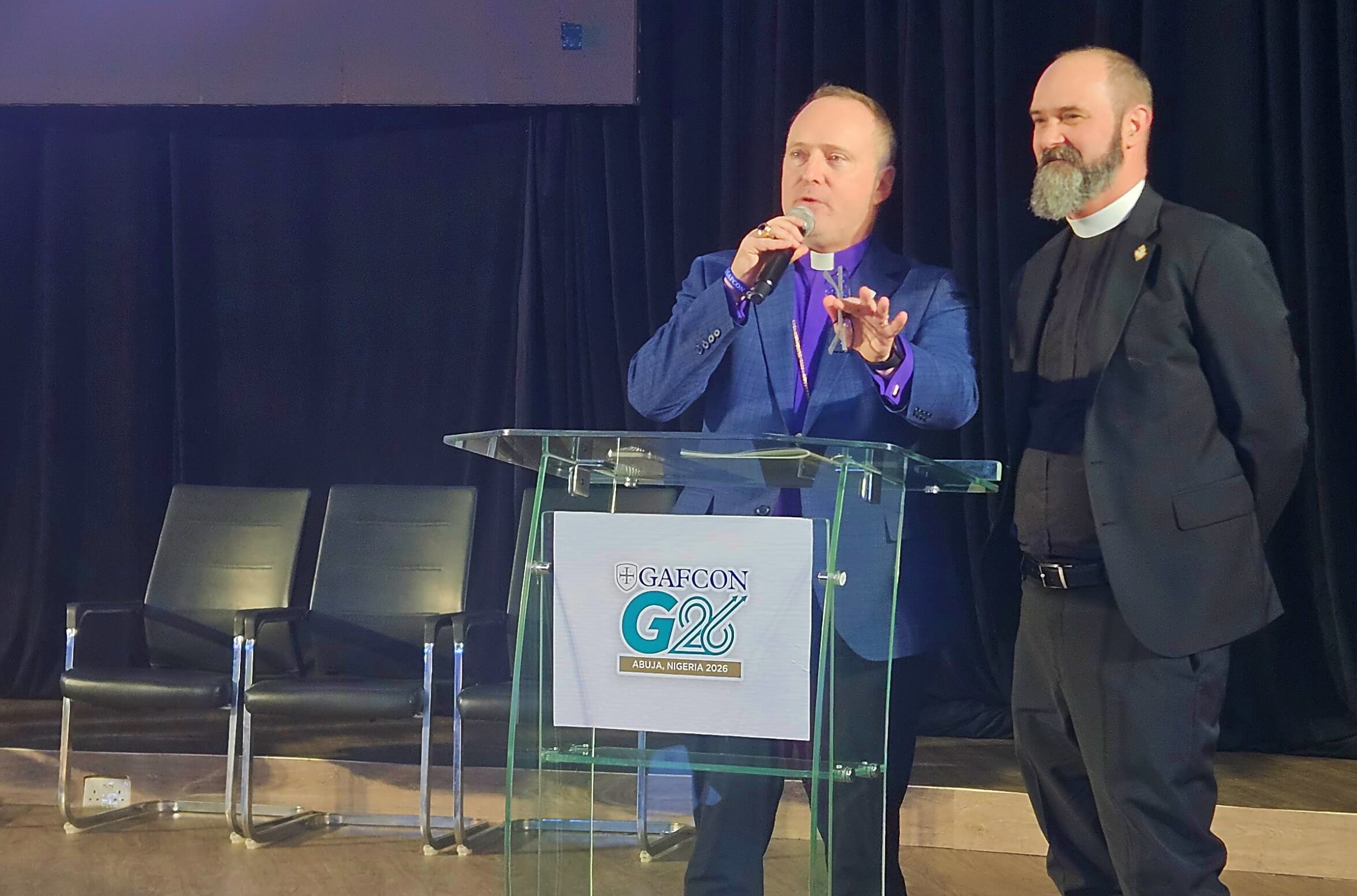
As the GAFCON Council continued its work in Abuja on the third day of meetings, bishops and Anglican leaders from across the Global Communion gathered for worship, teaching, and strategic discussion centered on the future of faithful Anglican witness. The day’s sessions emphasized a clear message: the future of Anglican unity must remain grounded in the authority of Scripture, the gospel of Jesus Christ, and a renewed commitment among orthodox churches to walk together in faithfulness.
The morning began with a sermon from the Most Rev. Michael Fape, who preached from the book of Joshua and issued a direct challenge to those gathered. Drawing on Joshua’s call to Israel to choose whom they would serve, Archbishop Fape urged Anglican leaders to make a clear and faithful commitment to the gospel. “We must make a choice of whom we will serve,” he said, warning that compromise with false teaching ultimately undermines the church’s witness. He reminded the council that only a godly generation can faithfully “contend for the faith once delivered to the saints,” and that obedience to God’s Word cannot be treated as optional for those called to lead Christ’s church.
The first plenary was delivered by Bishop Manasseh Gahima of Rwanda, who spoke about the importance of consistency and integrity in the life of the global church. Bishop Gahima reminded the council of GAFCON’s long-standing commitment not to financially support, or receive financial support from, structures that have promoted theological revisionism within the Anglican Communion. For GAFCON churches, he said, the marks of their fellowship have been a shared love for the gospel, commitment to one another, and a willingness to sacrifice for the sake of faithfulness. “It is common sense,” he said, “that those who believe the same things should connect and move forward together.” He also cautioned that meetings and institutional relationships are not neutral. They communicate legitimacy and shared purpose. As a result, he urged churches to exercise discipline and clarity in their partnerships, ensuring that fellowship is grounded in shared commitment to the historic faith.
After this, the Rev. Canon Mark Eldredge, President of the American Anglican Council (AAC), was given the opportunity to present the vision and mission of the AAC to those gathered. As one of the three sponsoring organizations helping make the GAFCON Council possible, the AAC has played an important role in supporting the work of strengthening biblical faithfulness and Anglican identity across the Communion. Eldredge briefly outlined the AAC’s ongoing ministries in church revitalization, Anglican governance, and leadership development, emphasizing the organization’s commitment to equipping churches and leaders to stand firm in the historic faith while serving the mission of Christ in their local contexts.
Archbishop Glenn Davies then addressed the Council on the constitutional and canonical implications of the current moment in global Anglican life. Drawing on the history of church governance from the apostolic period through the English Reformation, Davies explained how Anglican provinces have historically shaped their own constitutions and canons to reflect their identity and relationships within the wider Communion. In many cases, he noted, provinces historically included references to communion with the See of Canterbury within their constitutional structures, but as circumstances within the Communion have shifted, provinces are increasingly examining whether those references still reflect the reality of Anglican fellowship today. Davies emphasized that such discussions should not be misunderstood. “Differentiation is not departure,” he said, repeating throughout his presentation that faithful Anglicans are not leaving the Anglican Communion but seeking to reform and strengthen it around the truth of the gospel.
The final teaching session of the morning came from Bishop Ashley Null, who reflected on the Reformation foundations that shaped Anglican theology and continue to guide the church today. Drawing from the gospel itself, Null emphasized the central Christian truth that humanity cannot restore its relationship with God through its own efforts. Because of human sinfulness, he explained, God himself must reveal the way of salvation through Jesus Christ. The Reformers sought to bring the church back to these biblical foundations, challenging theological systems that had drifted from the authority of Scripture. In a similar way, Null argued, the church today faces new forms of teaching that, though often motivated by good intentions, lead away from the clear witness of the Bible. Faithfulness in the present moment therefore requires the same commitment to reform according to the gospel that shaped the church in earlier generations.
The Council leaders then announced the most significant development of the day: the establishment of a new Global Anglican Council to lead the Global Anglican Communion. This Council replaces the former Gafcon Primates Council and expands leadership to include not only primates but bishops, clergy, and lay leaders drawn from across the Communion. As part of this transition, the council unanimously elected Archbishop Laurent Mbanda of Rwanda to serve as its chairman, with Archbishop Miguel Uchoa of Brazil elected as vice-chairman. Leaders described the move as an intentional step toward a more conciliar model of shared stewardship for the Communion, one rooted in the Jerusalem Declaration and in a shared commitment to the authority of Scripture and the historic Anglican faith. (You can read our full report on these developments here)
The afternoon plenary sessions continued the day’s focus on the future leadership and mission of the Global Anglican Communion. Three speakers addressed the Council, each reflecting on the changing structures of the Communion and the responsibilities facing churches committed to biblical faithfulness.
The Rt. Rev. Dr. Mwita Akiri spoke on the theme on maintaining strong global leadership for a global church. Bishop Akiri, a Tanzanian Anglican leader and theologian, reflected on the significance of developing leadership structures that reflect the global nature of Anglicanism today. He described the proposed Council of Primates as a model of elected leadership rather than inherited authority, emphasizing that a chairman would serve the fellowship of provinces in a spirit of conciliarism while helping the Communion contend for “the faith once delivered to the saints.” Akiri also reflected on the historical shift taking place as leadership within the Anglican world increasingly reflects the vitality and growth of churches in the Global South.
The second plenary was delivered by the Rt. Rev. Dr. Emmanuel Chemengich, a Kenyan Anglican bishop, who spoke under the title “GAFCON is Leading the Communion.” Chemengich argued that the present moment represents a significant reordering within global Anglican life. While GAFCON churches have consistently maintained that they have not left the Anglican Communion, he suggested that the center of leadership within the Communion is now shifting toward churches that remain firmly committed to the authority of Scripture and the historic teaching of the church. He encouraged participants to embrace the responsibility of stewarding this moment with humility, clarity, and confidence in the gospel.
The final plenary speaker of the afternoon, the Rt. Rev. David McClay, Bishop of Down and Dromore in the Church of Ireland, addressed the theme of how to discern the way forward. Drawing from the ministry of Jesus in the Gospels, Bishop McClay emphasized that the mission entrusted to the church is fundamentally rooted in proclaiming the good news of Christ. He reminded the Council that the church’s calling remains centered on evangelism, spiritual renewal, and the proclamation of freedom in Christ. In this light, he urged Anglican leaders to continue seeking the guidance of the Holy Spirit as they discern how the global fellowship can move forward together in faithfulness and mission.
Together, the announcement of these revised structures and the teaching sessions throughout the day pointed toward a growing resolve among GAFCON leaders to move beyond reaction and toward the faithful building of structures that will strengthen orthodox Anglican fellowship. The Council’s discussions increasingly focused not only on defending the faith but also on providing durable frameworks for cooperation, accountability, and shared mission among provinces that remain committed to biblical teaching. As the Council continues its work in Abuja, many participants expressed hope that the next chapter of the GAFCON movement will continue to deepen the bonds of fellowship among Anglicans who share a common commitment to the authority of Scripture and the historic faith of the Church.