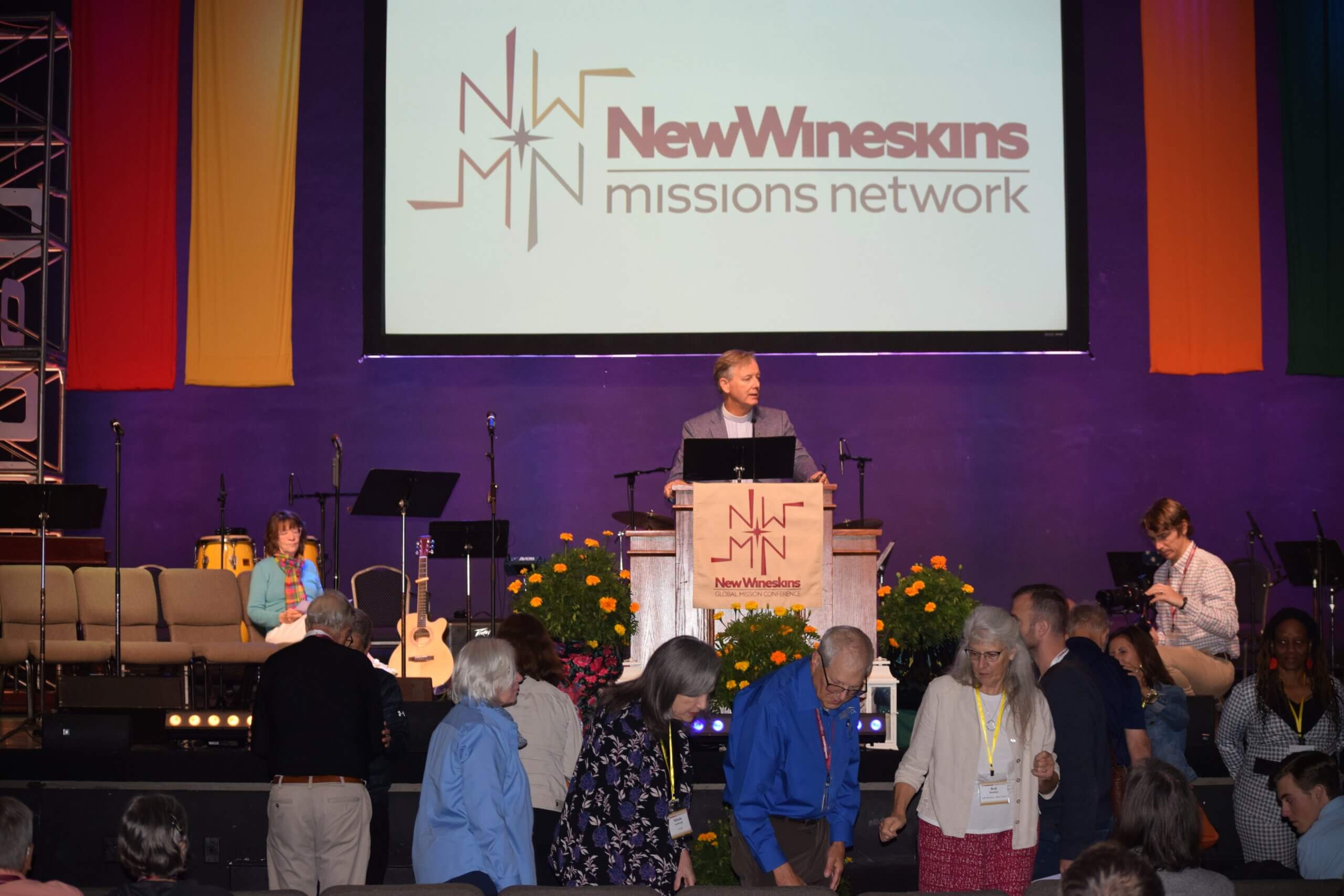
The Rev. Clancy Nixon, Director of the American Anglican Council’s Renew ministry, offered a workshop in the main auditorium that carried both a pastoral tenderness and a prophetic urgency. His focus was on the importance of inner healing, specifically through what is known as the Immanuel Approach. At the heart of this method is the invitation to encounter Jesus in the landscape of memory, both the painful ones that still echo with wounds and the joyful ones that remind us of God’s presence.
He began simply, asking participants to recall a positive memory. If the memory already included God in it, all the better. If not, he encouraged people to identify a moment that still carried with it feelings of comfort, peace, or joy. From there he led the group to pray that Jesus would meet them in that memory again, not as a distant figure from the pages of Scripture but as the living Christ who steps into the very moments that formed us.
The simplicity of the exercise showed its depth. Memory has a power we often underestimate. It is not just the past stored away, but an active force that still shapes us. Each of us walks with memories that can carry pain or joy into our present. A cutting remark from childhood, a season of deep loss, a betrayal left unresolved; these can echo through the years and shape how we love, how we trust, and how we serve. Likewise, a memory of kindness, of being protected, of hearing the Lord’s whisper in a time of fear can become a well of strength. Rev. Nixon reminded those gathered that the way we minister and live as Christians is deeply affected by these experiences. Our past is never just behind us; it lives on in how we see God, others, and ourselves.
For that reason, the work of prayer and healing is not optional for those who would serve Christ in the world. It is vital. To allow Jesus into those tender and wounded places is to discover that he redeems even our memories. He can change the meaning of them by his presence, bringing new stability, new freedom, and new hope. As Rev. Nixon said, healing prayer, counseling, and spiritual direction are not simply self-care. They are the means by which the Lord strengthens us to carry out the work he has given us to do.
This reminder is particularly important at a conference like New Wineskins, where the hallways are filled with missionaries and church planters who live at full speed. Many are constantly on the move, constantly giving, constantly pouring out. The danger of burnout is real, and it is often ignored until it is too late. Without stopping to receive healing, wounds deepen, exhaustion sets in, and ministries falter. Clancy Nixon’s workshop gave those who serve the nations permission to stop, to listen, and to invite Jesus into the places that most need his touch.
At the close of the session, prayer ministers stood ready to intercede for those who desired personal prayer. Some came forward with visible relief, as if they had been holding their breath for years. Others came with quiet steps but open hearts, seeking a word or a touch from the Lord. The presence of the Spirit was tangible, not in spectacle but in the quiet assurance that Jesus himself was moving among his people.

Later in the day, the Rev. Clancy Nixon continued the theme in a MAP talk focused on prayer for healing in the power of the Holy Spirit. His questions were practical and searching: How can we pray with New Testament results? How can we live with expectant faith? He reminded the audience that the ministry of healing is not reserved for those with a special gift but is part of the calling of every believer. Whether in evangelism, pastoral care, or simple encouragement, every Christian can pray in ways that invite God’s power to bring wholeness.
He drew from Scripture to show how healing prayer is both grounded and modeled in the life of the early church. Jesus healed as a sign of the kingdom. The apostles healed as a witness to the risen Lord. The church today is called to the same ministry, not as an optional extra but as part of the mission of God.
For many, his words were a challenge to move beyond theory and to pray with greater faith. For others, they were a reassurance that God delights to meet his people in their brokenness. Both sessions carried the same heartbeat: that Jesus, present and alive, meets us in our memories, our wounds, and our prayers, and through that meeting makes us whole.
In a week filled with teaching, fellowship, and vision for the nations, the Rev. Clancy Nixon’s focus on inner healing was a reminder that mission begins with the heart. Before we can go into the world, we must allow Christ to come into the depths of who we are. When he does, our lives and our ministries can flow from a place of greater freedom, stability, and joy.